


A few soft folds behind the knees are normal when you bend, sit, or walk. But if tights keep bunching when you stand, or feel tight and pulled, the fit may need attention.
Tights wrinkling behind the knees can come from extra fabric, uneven placement, or a size that doesn't give your legs enough length. A quick check while standing and moving can help you tell ordinary creasing from a fit problem. First, it helps to know what the fabric is doing when your knees bend.
Why tights wrinkle behind the knees
Bending naturally creates small folds
Tights move with your legs. When you bend your knees, the fabric compresses at the back of the joint, so small creases are part of wearing hosiery. You may see them more clearly in opaque tights or in a smooth, close-fitting outfit, but their presence alone doesn't mean the pair is too big.
Stand naturally and look at your legs without pulling the fabric taut. If the tights look smooth overall and the folds appear mainly when you sit or bend, that's usually ordinary movement. They should relax again when you stand.
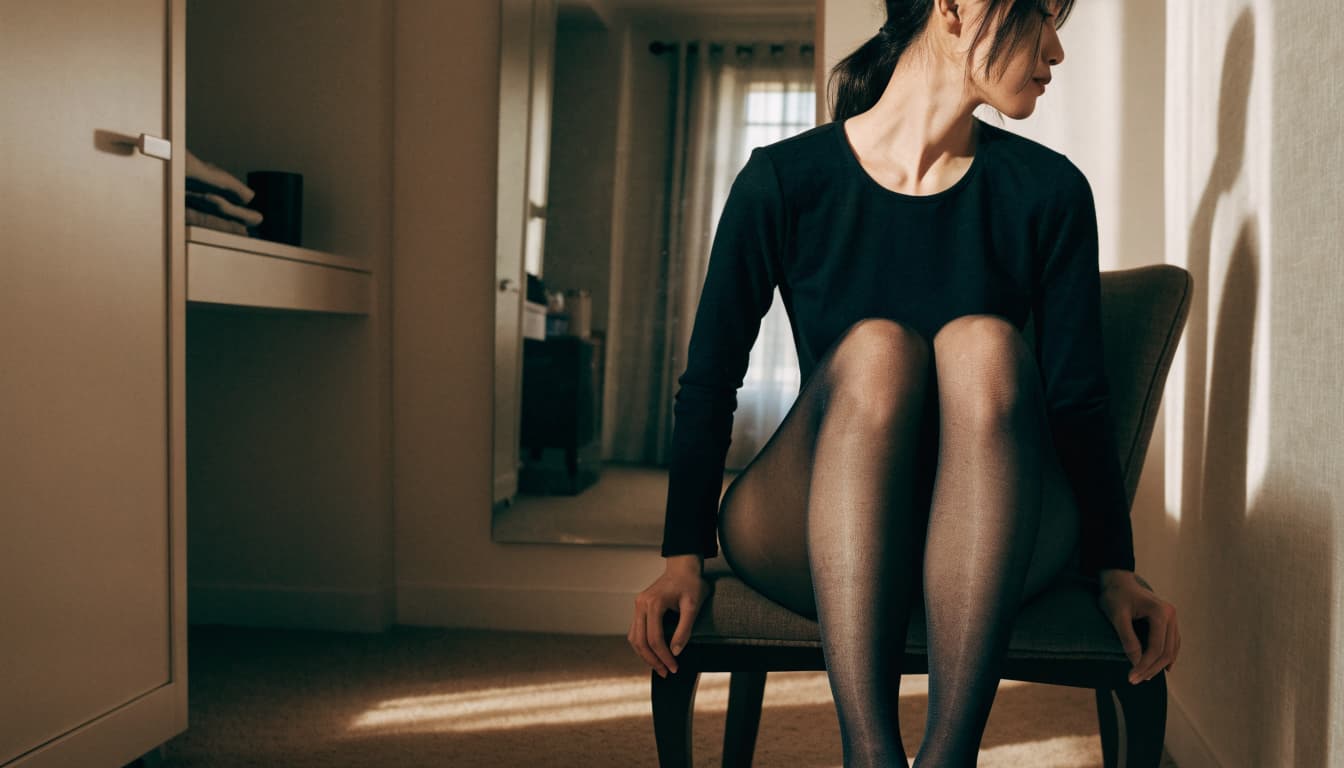
Uneven fabric can collect at the knee
Tights can also wrinkle when the material hasn't been spread evenly along the leg. Pulling the waistband up before settling the feet, ankles, and calves can leave one area stretched while another has extra fabric. That extra material may gather behind the knees as you move.
A wrinkle that stays in place after you stand and smooth the tights is worth noticing. So is bunching that returns right away, especially when the rest of the leg looks loose. Check the fabric below and above the knee before deciding the size is wrong.
How to tell normal creasing from a fit concern
Check the tights while standing and moving
A mirror check while standing still is useful, but it's only part of the picture. Walk across the room, sit down, bend your knees, and stand again. The tights should move with you without making you pull at the waistband or repeatedly smooth the same spot.
A few shallow folds as your knees bend are expected. More persistent bunching, a twisted line of fabric, or a constant need to tug suggests that the fabric isn't sitting evenly or the style may not suit your proportions.
Notice what happens elsewhere on the leg
The knees aren't the only place that can show a fit issue. Extra fabric at the ankles may mean the tights are too roomy overall, or that they weren't pulled on gradually. Tight toes, a waistband that keeps sliding down, or a gusset that shifts can point to a length or size mismatch.
If the fabric feels strained at the toes and the waistband is pulled down, the tights may be short for your legs, even if the size seems roomy elsewhere.
Look at the whole fit rather than judging one wrinkle by itself. The hosiery fit tips for tall women include a practical test: smooth the tights from ankle to thigh, then walk, sit, and stand to see whether the waistband and gusset stay comfortably in place.
Put tights on gradually for a smoother fit
Set the feet and legs before the waistband
Putting tights on in a hurry can leave the fabric bunched before you even get dressed. Start by gathering one leg down toward the toe. Place your foot inside, settle the toe and heel, then ease the material over your ankle and calf. Repeat on the other leg before bringing the tights upward.
Use your palms to smooth each section in small steps. Once the fabric reaches your knees, straighten your legs and check that the material lies evenly. Then continue toward the thighs and bring the waistband to your natural waist.
Avoid pulling hard from the top
The waistband is the finishing point, not a handle for dragging the whole garment into place. Pulling from it can stretch the upper part before the legs have been positioned properly. That may leave the fabric uneven, with excess around the knees or ankles.
Give yourself an extra minute, especially with delicate hosiery. Remove rings or bracelets that could catch the fabric, and smooth rough nail edges before dressing. For more guidance on how to choose the right hosiery size, use the product's own chart and put the pair on gradually from toe to waist.
Size and length can change where fabric gathers
Use height and weight, not clothing size alone
Hosiery sizing isn't the same as dress sizing. Height matters because the tights need enough length through the legs and rise, while weight helps indicate the room needed through the body. A pair that feels short may pull downward as you move, leaving tension through the knees and toes.
If the fabric feels too tight, don't size down for extra control. Check the height and weight guidance for the specific style. A size that offers enough room through the hips may still lack the leg length you need, so choose by the full chart rather than one measurement alone.
Check the chart for the exact style
Sizing can vary among hosiery styles, so don't assume every Queen size or every pair follows the same chart. Berkshire offers extended sizing in select styles, and some products have options such as Queen Petite. For example, the Easy On! Plus 40 Denier Microfiber Tight is available in Queen size options, including Queen Petite.
If you see excess fabric after smoothing the tights carefully, the size range may not be right for you. If they feel short, pinch, or pull down, look for a size option with a more suitable height range. Our Berkshire queen size hosiery fit guide covers why it's important to use the chart for the style you're choosing.
Fabric and style affect the finished look
Choose coverage that suits the outfit
Sheer and opaque tights don't look identical on the leg. The weight and finish of a pair can make folds more or less noticeable, especially when you're wearing a close-fitting skirt or dress. A smoother, more structured outfit may also show small ripples that you wouldn't notice under a looser hem.
Choose the coverage you like, then consider how it works with your outfit and plans. A sheer style can feel light with a dress, while an opaque pair gives fuller coverage. Neither will prevent the knees from bending, but the overall finish can change how visible a crease looks.
Try another construction if the fit keeps bothering you
Sometimes the size is close, but the particular rise or construction doesn't feel comfortable. A control-top style may feel secure to some wearers, while a non-control top may be more comfortable for others. The best choice is the one that stays in place without pinching, rolling, or pulling.
If you keep adjusting the knees throughout the day, try a different size or style rather than relying on repeated tugging. And, remember that a stretchy fabric can give, but it can't provide length that isn't there. The toes, knees, and waistband all offer useful clues.
Styling tips for a smooth, comfortable look
Choose an outfit that lets the hosiery move comfortably. A skirt or dress with a little ease through the legs can make ordinary knee creases less noticeable than a very close-fitting hem. If you're wearing boots, take a moment to smooth the tights before pulling the boots on, so fabric doesn't collect beneath the boot shaft.
For a polished look, coordinate the hosiery with your shoes or outfit colors. Black tights with black shoes create a continuous line, while tan shades can blend softly with warm neutrals. These simple combinations keep attention on the outfit rather than a small fold at the back of your knee.
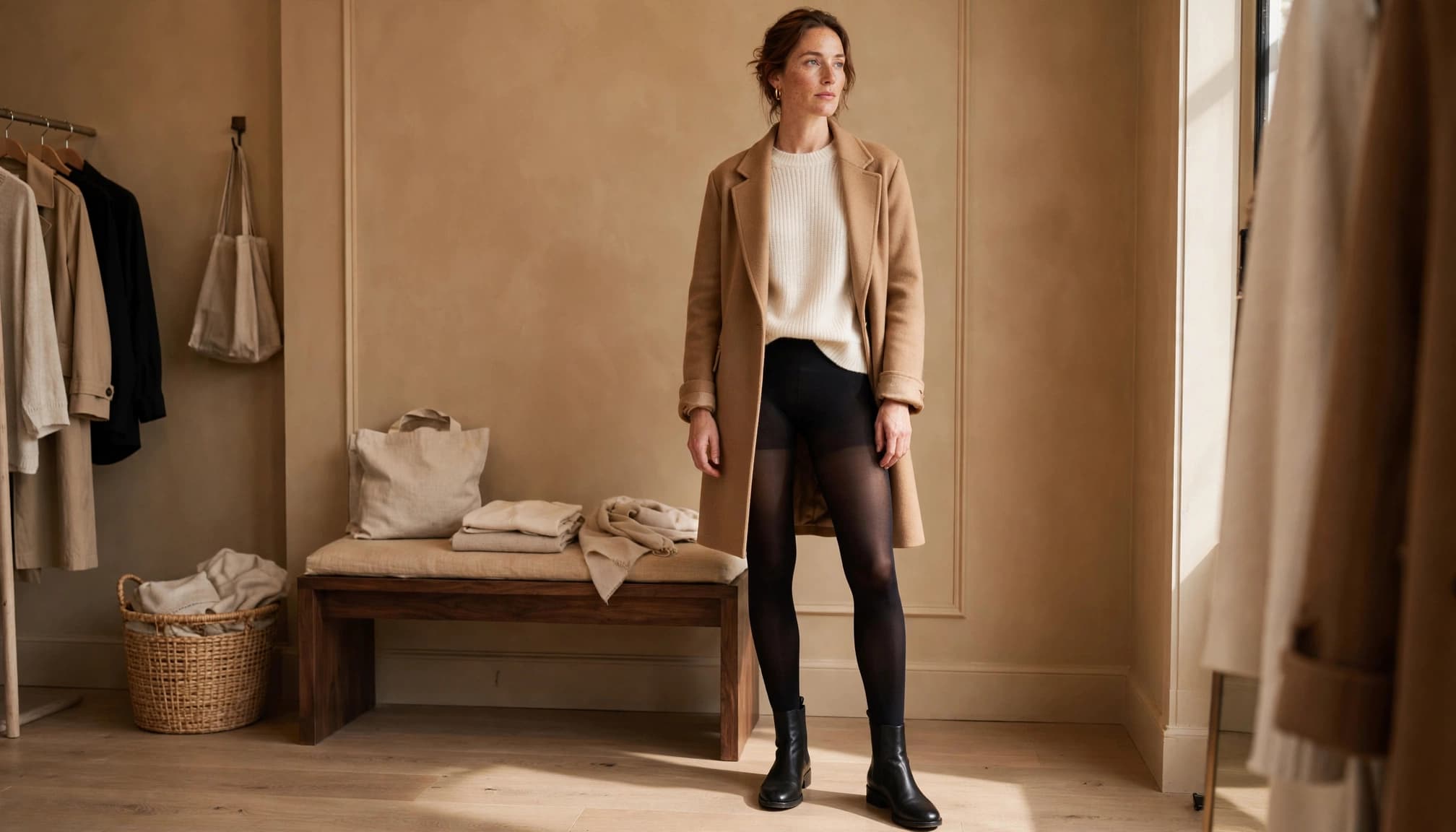
Before leaving home, try the complete outfit and move around in it. Sit, stand, and take a few steps. Tights that feel comfortable through those everyday movements are much easier to wear all day.
Key takeaways
- Small creases behind bent knees are normal. They should ease when you stand.
- Persistent bunching can come from unevenly distributed fabric or a size and length that don't suit you.
- Put tights on from the toes upward, smoothing each section instead of pulling hard from the waistband.
- Use the height and weight chart for the specific style, and look for signs elsewhere, such as tight toes or extra ankle fabric.
- If constant adjusting continues, try a different size or construction.
Frequently asked questions
Are wrinkles behind the knees normal in tights?
Yes, small folds can form when you bend your knees. They're usually normal if the tights look smooth when you stand and don't feel uncomfortable. Wrinkles that remain after smoothing, or bunching that makes you keep tugging, may point to uneven placement or a fit issue.
Should I buy a smaller size to prevent knee wrinkles?
Not automatically. A smaller size may add tension and make the tights feel tight through the toes, thighs, or waistband. Check the product's height and weight chart first, then consider whether the fabric is simply unevenly placed.
Can tights that are too short wrinkle behind the knees?
A short fit can pull downward as you move and strain the toes or waist. The knees may be one place where you notice the fabric shifting, but check the full fit before deciding. The waistband, gusset, and toe area can help show whether the tights have enough length.
How can I stop tights from bunching while I put them on?
Gather each leg toward the toe, settle your foot into place, and ease the fabric up over your ankle and calf in small sections. Smooth the legs before bringing the waistband to your natural waist. This helps spread the fabric more evenly.
A comfortable fit makes all the difference
A few folds when you bend are part of wearing tights. Persistent bunching, pulling, or sagging deserves a closer look at how the fabric sits and whether the size and length suit you.
Put them on gradually, smooth the legs, and test the fit while moving. When the tights feel comfortable and stay in place, you can enjoy the outfit without fussing over your knees.


