


Nothing can spoil a polished outfit faster than hosiery that rolls, sags, or feels tight by lunchtime. Finding the right fit in Berkshire queen size hosiery starts with a few simple measurements at home.
A soft tape measure gives you useful information about your proportions, but it isn't the final sizing decision. Berkshire's current product pages use style-specific height and weight charts, so measure carefully, then check the chart for the exact pair you want.
How to measure Berkshire queen size hosiery at home
You don't need a complicated setup. Choose a private, comfortable space, wear light clothing, and keep a soft tape measure nearby. Thin underwear or lightweight shapewear is fine, but skip bulky jeans, sweaters, or anything that adds extra inches.
Start with your height and weight
Stand barefoot on a hard floor with your back against a wall. Keep your heels down and your head level. If possible, have someone mark the wall, then measure from the floor to the mark. Otherwise, use your most recent reliable height.
Record your current weight as well. Berkshire's visible sizing guidance is based mainly on height and weight, and those numbers appear on individual product pages. They can also change with different styles, so don't rely on an old package or a size you purchased years ago.
Measure your waist and hips
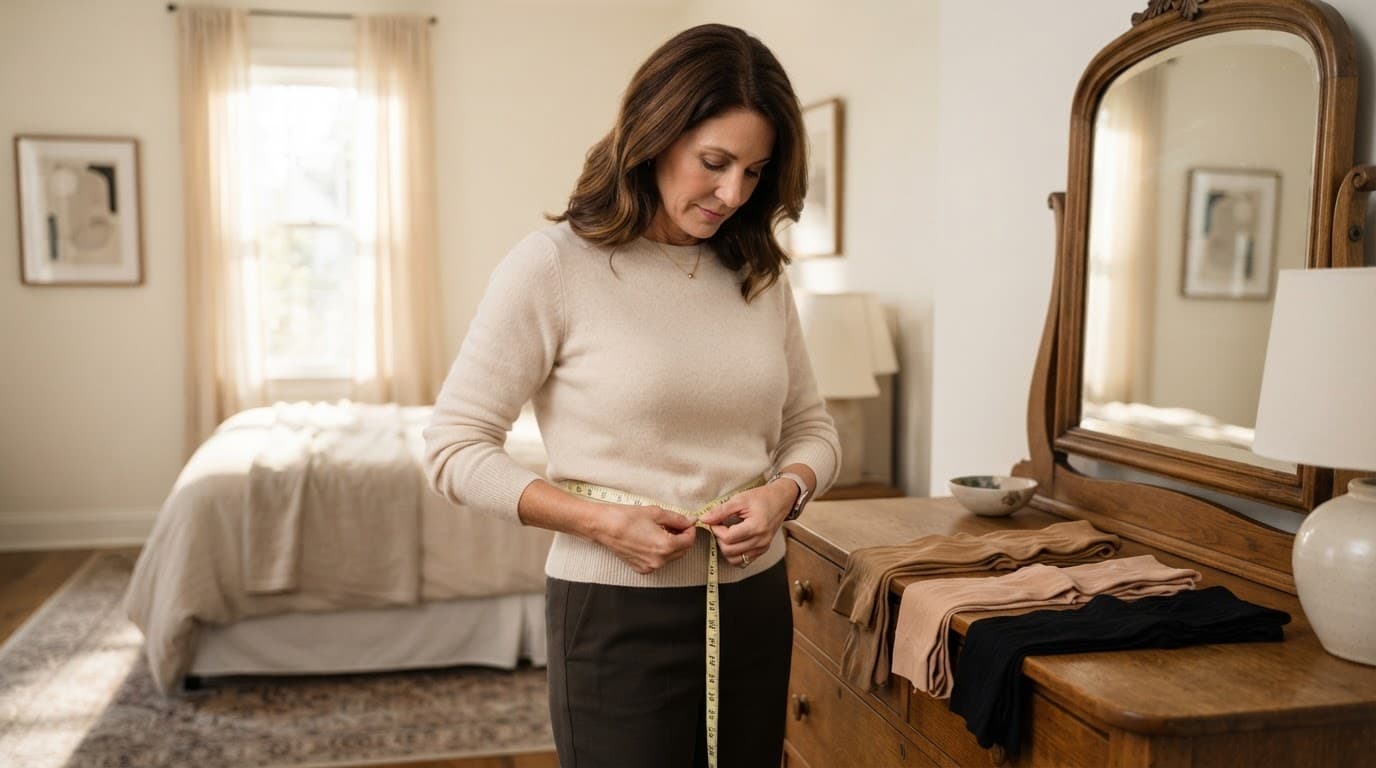
Wrap the soft tape around your natural waist, usually the narrowest part of your torso. Keep the tape level and comfortably touching your body. Don't pull it tight, hold your breath, or suck in your stomach (we've all done it once!).
Next, measure around the fullest part of your hips and seat. Stand naturally with your feet together and keep the tape parallel to the floor. Take both measurements twice. If the numbers differ, use the larger accurate reading rather than trying to make the tape fit a preferred result.
A thigh measurement can be helpful for your own fit notes, especially if hosiery often feels tight around the upper leg. Don't substitute it for a chart measurement unless the product page specifically requests it.
Measuring isn't the same as choosing your final size
This small distinction makes Berkshire queen size hosiery much easier to shop for. Your waist and hip measurements help you understand your shape, while the product's current chart tells you which available size to select.
Let the specific product chart decide
Berkshire queen labels can include Q-Petite, 1X-2X, 3X-4X, 5X-6X, and 7X, depending on the style. There isn't one universal set of measurements that applies to every pair.
Before adding hosiery to your cart, open the size chart attached to that product. For example, the chart for queen silky sheer support pantyhose should guide your choice for that style, not a different Berkshire product you bought before.
Your tape measurements are still valuable. They show whether your hips are fuller in proportion to your height, or whether you may need extra room through the seat and waistband. Think of them as a fit check, not a replacement for the official chart.
Check the style and compression level
A non-control pantyhose style won't feel the same as a control-top pair. Support and graduated compression hosiery also need to be checked separately because the leg construction changes the way the garment fits.
Berkshire's Queen All Day Sheers 4416, Queen Silky Sheer Support 4417, and compression styles such as 8100 Relief 70 and 8101 Relief 30 each have product-specific sizing information. Even when two products carry a queen label, their fit ranges may not match.
This is especially important when moving between regular sheer pantyhose, tights, support hosiery, and stronger compression. Always check the chart for the exact style and compression level you plan to wear.
What to do when you're between sizes
Between-size decisions can feel confusing, especially when your height points toward one size and your weight points toward another. Don't choose based on the word "queen" alone. Compare both numbers with the current product chart and look at how you normally experience hosiery fit.
Consider where you need more room
If hosiery usually feels short through the body, rolls down at the waistband, or leaves you tugging throughout the day, you may need more length or room through the seat. If the legs fit well but the waistband digs in, a control-top style may not be your most comfortable choice.
For non-control and sheer styles, the larger available size can be a comfortable starting point when the chart permits it and you prefer a relaxed fit. A pair that's slightly too small can feel restrictive and may run more easily when you pull it into place.
Don't automatically size up in support or compression hosiery. Extra room can affect how the garment feels on the leg and may change the intended support. Follow the product chart, and if you're choosing medical compression, follow your healthcare provider's instructions too.
Ask for help when the chart doesn't settle it
Have your height, current weight, waist measurement, hip measurement, and preferred style ready. Berkshire customer care can help you compare those details with the product's available sizing when two options seem equally close.
That quick check is often easier than ordering the wrong size, especially when you're shopping for a new level of support or a different hosiery construction.
Check the fit after you try them on
A good fit should feel smooth and secure without constant adjusting. The waistband should lie flat, the panty should reach the right height, and the legs should look even without heavy wrinkles or tight bands.
Put hosiery on slowly, following our step-by-step guide to putting on hosiery: gather each leg to the toe, ease it over your foot and calf, then work it upward in small sections. Avoid pulling from the waistband, which can put extra stress on the fabric. Once it's on, smooth the material with your palms so the stretch is spread evenly.
Watch for these common measuring and fitting mistakes:
- Measuring over thick clothing instead of light, close-fitting layers.
- Holding the tape too tightly or letting it hang loosely.
- Using an old weight or guessing your height.
- Assuming every Berkshire queen style uses the same chart.
- Confusing Q-Petite with a standard queen size.
- Choosing a size only because the color or denier is appealing.
Berkshire queen size hosiery should feel like part of your outfit, not something you have to manage every few minutes. If you notice sagging, pinching, or excess fabric, check the chart again before deciding that the style itself isn't right for you.
Find your comfortable Berkshire fit
The best way to measure for Berkshire queen size hosiery is to combine accurate at-home numbers with the current chart for your chosen product. Use light clothing, a soft tape measure, a natural stance, and your current height and weight.
Then consider the details that affect comfort, including control tops, non-control designs, tights, support, and compression. A few careful minutes before ordering can make all of the difference, helping you find hosiery that looks smooth, feels comfortable, and stays in place.


