


A pair of stockings can change an outfit in seconds, but womens hosiery history began with a much simpler need: keeping legs warm, protected, and comfortable. Over time, wool coverings became fitted stockings, silk became a luxury, nylon transformed the market, and tights gave women an easier way to dress for changing hemlines.
Today, you can choose hosiery for warmth, support, coverage, shaping, or a barely-there finish. The history behind those choices makes shopping easier, too. Once you know what each style was designed to do, finding the right pair feels much less confusing.
Womens hosiery history: from warmth and protection to elegant stockings
Early leg coverings weren't made for fashion alone. People wrapped, stitched, or tied fabric around their legs to protect against cold weather, rough ground, and wear from clothing. Exact dates vary because early hosiery wasn't always preserved, but the purpose is clear.
Fitted stockings became more common in medieval and early modern Europe. Both men and women wore them, often choosing wool for warmth or silk for a smoother finish. Before elastic was available, garters, ribbons, and ties helped keep stockings in place.
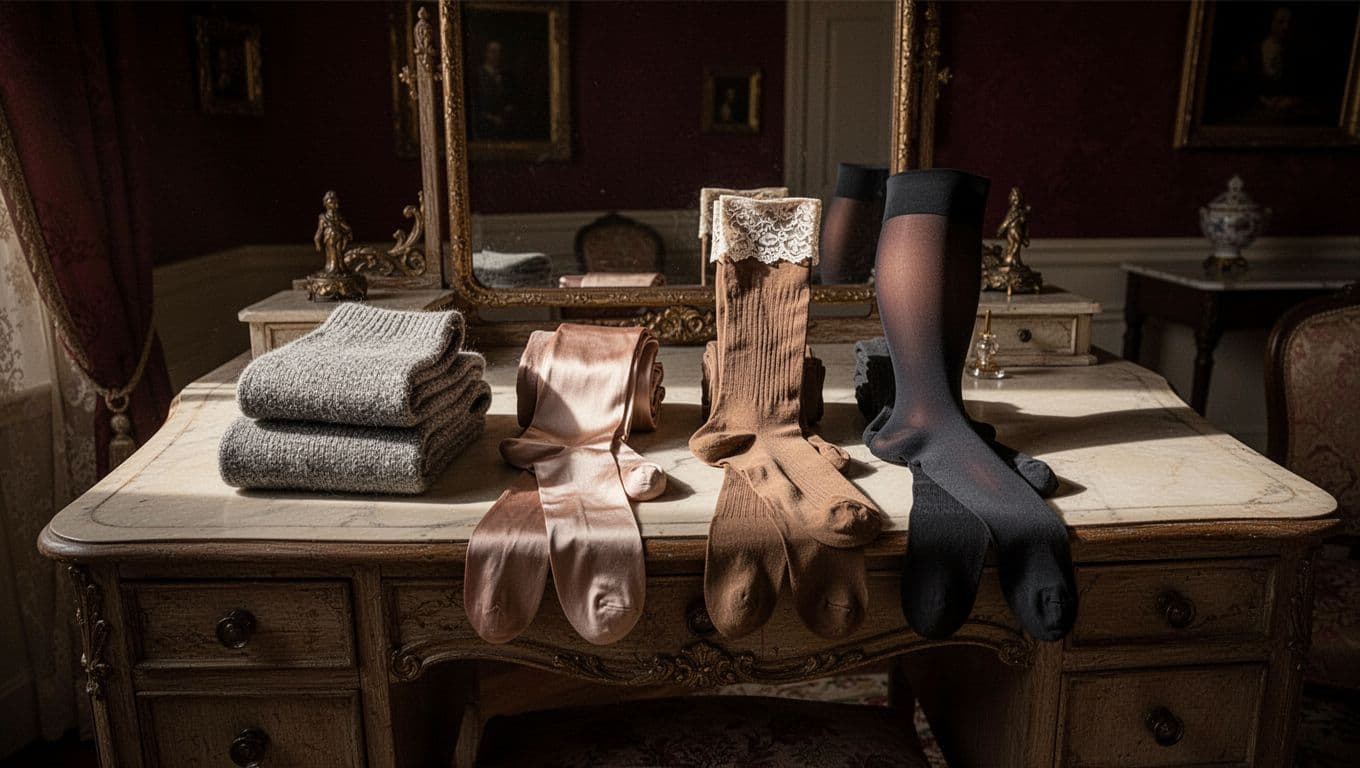 ### Why silk stockings were once a luxury
Silk stockings looked smooth, refined, and wonderfully polished, but they were expensive to make. Early stockings required skilled handwork, and producing enough silk took time, labor, and access to costly imported materials.
A fine pair could signal wealth through its color, evenness, and quality. Silk wasn't an everyday choice for most women. It belonged to wardrobes where the price mattered less than the graceful appearance.
That association still feels familiar today. Sheer hosiery gives the legs a smooth look, adds a light layer of coverage, and finishes an outfit without making it feel heavy. A pair of queen ultra sheer control top pantyhose carries that polished look into a much more practical wardrobe.
How knitting made stockings more practical
Knitting changed the shape and feel of stockings. Hand-knitted versions could follow the leg more closely than simple wrapped cloth, although every pair still depended on the maker's skill.
Later knitting machines improved consistency and production speed. Stockings became more uniform, easier to buy, and more practical for daily wear. Better shaping also helped hosiery fit the ankle, calf, and thigh with fewer awkward folds.
That shift mattered. Hosiery slowly moved beyond elite wardrobes and became a regular part of women's clothing. The basic goal stayed the same, but better construction made stockings easier to wear.
How nylon and shorter hemlines changed women's hosiery
The biggest twentieth-century change arrived with nylon. DuPont developed nylon in 1937, and nylon stockings were demonstrated at the 1939 New York World's Fair. Limited public sales began in Wilmington, Delaware, later that year, followed by national U.S. sales on May 15, 1940.
Nylon appealed to shoppers because it was sheer, strong, lightweight, and less expensive than silk. It gave women a smooth leg without the same level of luxury pricing.
When the United States entered World War II, nylon was redirected to military supplies. Parachutes, rope, and other defense materials took priority, so civilian stockings disappeared from store shelves. After the war, nylon returned to women's fashion, and demand was immediate.
From garters to pantyhose for a smoother, simpler fit
Gartered stockings worked well when skirts were longer and stocking tops stayed hidden. Shorter skirts in the 1950s and 1960s made that arrangement harder to manage. A visible stocking top or slipping garter could ruin an otherwise lovely outfit.
Allen Gant Jr. of Glen Raven Mills developed Panti-Legs in the late 1950s. The design was patented around 1958 and helped lead hosiery toward the all-in-one fit women know today. Pantyhose became widely popular in the mid-1960s, especially as miniskirts changed what women wanted from their legwear.
Here is the simple difference:
- Stockings cover the leg and usually stop at the thigh. They need garters or another way to stay up.
- Thigh highs have a band at the top and don't require a garter belt. They offer the classic stocking look with less fuss.
- Pantyhose include a panty section and cover the waist, hips, and legs in one piece.
- Tights usually provide more coverage and warmth. They can be sheer, opaque, textured, patterned, or colored.
The best option depends on your outfit, the weather, and how much coverage you want. So, there isn't one perfect hosiery style for every occasion.
Why stretch fibers improved comfort and fit
After the postwar period, spandex became increasingly common alongside nylon. Stretch fibers helped hosiery cling to the leg, reduce slipping, and fit more body shapes comfortably.
That extra give made a big difference, but fiber content isn't the whole fit story. Waistband design, toe construction, leg length, and the amount of stretch all affect how a pair feels after several hours.
Size charts matter, too. A small, medium, or large label doesn't tell the full story when height, weight, hip shape, and torso length vary so much. For a smoother fit, check measurements before ordering.
Support hosiery, tights, and everyday comfort in the modern era
Hosiery became more than a finishing touch. Modern designs can add warmth, smooth the waist and hips, offer extra leg coverage, or provide graduated support for everyday wear.
Graduated compression means the hosiery feels firmer near the ankle and gradually eases higher on the leg. The design gives the lower leg more support without making the entire garment feel equally tight. For shoppers comparing support-focused options, queen-size support pantyhose show how sheer styling and graduated support can work together.
How hosiery became part of personal style
Opaque tights gave women a warmer option under dresses and skirts. Fishnets added edge, while lace tops brought a romantic touch. Backseams created a vintage-inspired line, and shimmer hosiery gave evening outfits a little extra glow.
Color changed the conversation, too. Black remains a classic, but burgundy, navy, gray, and other shades can make a simple dress feel completely different. Open-toe designs work with selected shoes, while sandalfoot toes create a cleaner look with sandals and dressier footwear.
Hosiery can also change how much of an outfit you see. Sheers keep the look light. Opaque tights provide stronger coverage. Thigh highs preserve the elegant shape of traditional stockings while giving you a modern styling choice. If you love that look, classic thigh-high hosiery styles are easy to compare with everyday sheer options.
The shift toward more inclusive sizing and nude shades
Earlier generations of shoppers often had fewer choices in both size and color. Today, women expect hosiery to account for different heights, body shapes, and skin tones. And, it makes all of the difference!
Regular, plus, and queen sizing can offer a more comfortable fit than forcing one garment across too many body types. A waistband should stay in place without digging, and the panty section should provide enough room to sit comfortably throughout the day.
Nude hosiery also needs more range. A shade that disappears beautifully on one woman may look too pale, too yellow, or too dark on another. Having several nude tones makes it easier to find a natural finish instead of settling for a close-enough match.
Fit and confidence belong in the same conversation. Hosiery should help you feel comfortable in your clothes, not make you spend the day adjusting your waistband.
A good fit isn't only about staying up. It should also feel right at the waist, hips, toes, and ankles.
What hosiery history means for choosing the right pair today
The best hosiery style depends on what you're wearing and how you want to feel in it. Start with the occasion, then consider coverage, weather, shoes, and the amount of support you prefer.
### Match the style to your outfit
Sheers are ideal when you want a polished, lightweight finish. They work beautifully with work dresses, skirts, special-occasion outfits, and any look where you want coverage without an obvious heavy layer.
Tights are better for cooler weather or outfits that need stronger coverage. Choose opaque tights for warmth and a clean, solid finish. Patterned tights, fishnets, and shimmers can add personality when the rest of your outfit is simple.
Thigh highs create a classic look without covering the waist. They work well when you want the feel of stockings but prefer not to wear pantyhose. Knee highs are useful under trousers or with shorter hems, especially when you want coverage below the knee without a full leg garment.
Support styles are a practical choice when your legs need added comfort during a long day. Control-top hosiery can smooth the waist and hips, while support pantyhose focus more on the legs. These features aren't interchangeable, so check the product description before choosing.
Check the details before you buy
Measurements should come before the size label. Compare your height and weight with the brand's chart, then check whether the garment is regular, petite, plus, or queen size. If you're between sizes, the larger option may offer a more comfortable fit, depending on the fabric and construction.
Think about the toe, too. A reinforced toe can add durability. A sandalfoot toe is designed for more open shoes. An open-toe style leaves the toes uncovered, but it won't work with every shoe or outfit.
Control level is another personal choice. Light control may feel comfortable for everyday wear. Firmer control can create a smoother line under fitted clothing, but it shouldn't pinch or make sitting uncomfortable. Berkshire's extra-wear queen control top pantyhose combine a silky leg with a reinforced toe for shoppers who want smoothing and durability.
The history of hosiery gives you plenty of choices, but your own wardrobe should make the final decision. Pick the pair that works with your clothes, your shoes, and your plans for the day.
Why the right hosiery still matters
Womens hosiery history tells a practical style story. Protective leg coverings became silk luxury, machine-made nylon stockings, convenient pantyhose, expressive tights, and supportive legwear in a wider range of sizes and shades.
You don't have to choose between comfort and a beautiful finish. Sheers, tights, stockings, thigh highs, knee highs, and support styles each have a place in your wardrobe. The right pair lets you choose your coverage, support, and personal style with confidence.


