


Shopping for pear-shaped hosiery should start with comfort, not with trying to change your body. If your hips and thighs are fuller than your waist, the right pair should give you enough room through the seat while keeping the waistband smooth and secure.
That means looking beyond your usual dress size. Height, weight, rise, control level, denier, and toe construction all affect how hosiery feels once you're sitting, walking, and getting through your day. Here's how to choose a Berkshire style that works with your proportions and your outfit.
Start with fit, not just size
A pear-shaped figure isn't a sizing problem. It simply means you may notice the difference between a pair that has enough room through the hips and one that feels stretched at the top.
Before choosing a style, take your current height and weight, then compare them with the chart attached to that exact product. Berkshire queen-size labels can include Q-Petite, 1X-2X, 3X-4X, 5X-6X, and 7X, depending on the style.
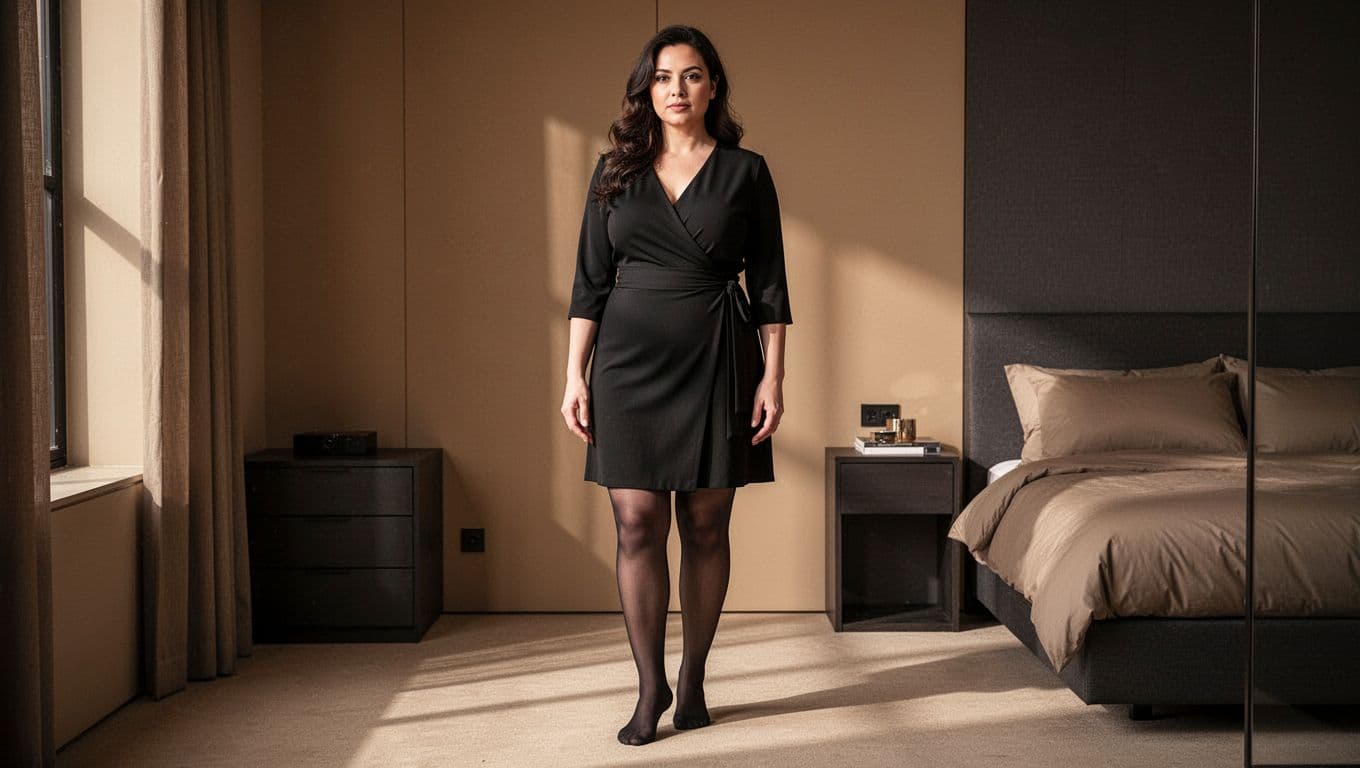
Use height and weight together
Hosiery needs enough length through the leg and rise through the panty. Choosing by jeans size alone won't tell you whether the waistband will sit comfortably or whether the fabric will pull across your thighs.
Stand barefoot on a hard floor when checking your height. Use a reliable current weight, and measure while wearing light clothing. Your waist and hip measurements are helpful, too, especially when you're deciding whether you need extra room through the seat.
The Berkshire hosiery size guide is a useful starting point, but the chart for the product in your cart should make the final decision.
Read the chart for the exact style
Berkshire sizing isn't identical across every product. For example, the 4411 Queen Ultra Sheer style lists 1X-2X for heights of 5'5" to 5'10" and weights of 170 to 220 pounds. Another style may use a different height or weight range for the same label.
That's why an old size from a different pair isn't always the best guide. Compare your current measurements with the current chart, then think about how much ease you prefer. A little extra room can be especially welcome when you sit for long periods or move throughout the day.
Choose the hosiery construction that suits you
Once you know your likely size range, look at the construction. A silky sheer pantyhose, an opaque tight, and a support style won't feel the same, even when they share a label.
The best pear-shaped hosiery is the pair that gives you the amount of stretch and coverage you actually enjoy wearing. Some women like a smooth control top under fitted dresses. Others prefer a softer non-control panty with more freedom through the waist.
Sheer styles keep the look light
For a barely-there finish, Berkshire's Queen Ultra Sheer Control Top Pantyhose with Sandalfoot Toe 4411 is a 15-denier style. Its panty is made with 80% nylon and 20% spandex, while the leg is 100% nylon.
The control top gives the panty area more structure than a non-control style, while the sandalfoot toe keeps the finish light in pumps and loafers. You can see the product details for the Queen ultra-sheer control top pantyhose before choosing your shade and size.
For a slightly different feel, the Queen Silky Sheer Extra Wear Control Top Pantyhose 4489 has a silky leg and reinforced toe. That combination works well when you want sheer coverage with a toe construction suited to closed shoes.
Opaque tights offer more coverage
Opaque tights bring more visual weight to a skirt, sweater dress, or pair of boots. Berkshire's Queen Microfiber Opaque Control Top Tight 4808 is a 40-denier style with a microfiber leg and Pana-fit construction.
A 40-denier tight is a lovely middle ground. It looks more substantial than an ultra sheer, but it doesn't have the heavy appearance of a very thick winter tight. The Queen microfiber opaque control tights are worth considering when you want matte coverage and a control-top design.
Compare control placement carefully
Control doesn't mean the same thing in every pair. Read the product description to see where the shaping or added structure is placed, then choose the feel that matches your outfit and your comfort preferences.
Pear-shaped figures often benefit from a panty that accommodates the hips without making the waistband feel overly tight. But, that doesn't mean everyone wants firm control. Your preferred level of support matters just as much as your proportions.
Control tops smooth the panty area
A control top can feel helpful beneath a fitted dress or pencil skirt because it gives the waist and lower tummy area a more secure feel. The right size should still allow you to sit and bend comfortably.
If the waistband rolls, digs in, or slides down, check the size before blaming the construction. A pair that's too small has to stretch farther across the hips and waist. A pair that's too large may wrinkle, sag, or create extra fabric at the ankles.
The Berkshire Control Top Slimming Tights 4784 is an 80-denier option with a firmer control-top design and fuller leg coverage. Its listed 1X-2X range is 5'5" to 5'11" and 180 to 245 pounds, while 3X-4X is listed for 5'5" to 5'11" and 200 to 275 pounds. Always check the current product chart before ordering.
Tummy, thigh, and rear control feel different
If you prefer shaping through more than the waist, Berkshire's Control Tummy & Thigh Sheer Shaping Pantyhose 4757 has a 20-denier leg, tummy and thigh shaper, and reinforced toe. The tummy and thigh shaping pantyhose can be a practical choice when you want a more structured panty beneath a sheer leg.
Another option is the Berkshire Reversible Two-Way Wear Opaque Control Top Tight 4769. Its design lets you wear the control panel for tummy or rear control, depending on which placement feels better with your proportions and outfit. The reversible two-way opaque control tights are especially interesting when your preferred fit changes between dresses, skirts, and longer tops.
Neither style is automatically better. The right choice depends on where you want support and how much structure you enjoy.
Pick denier and color for your outfit
Denier changes the appearance of hosiery. Lower numbers look lighter and more transparent, while higher numbers give you more coverage and a stronger visual line.
Your color choice matters, too. Think about the complete outfit, including the hemline, shoes, and the tone of your skin.

Choose tan shades for a softer line
A close tan, beige, or brown shade can look polished with navy, cream, camel, denim, and lighter workwear. Match hosiery to your legs rather than your hand, since your legs may have a different tone from sun exposure or natural variation.
With a black dress, tan hosiery keeps the outfit lighter. With beige clothing, a close skin-tone match creates a clean, understated line. Warm undertones often pair well with golden or caramel shades, while cool undertones can suit soft beige and taupe.
Let black hosiery become part of the outfit
Black hosiery creates contrast, and that contrast can be wonderfully stylish. Sheer black looks refined with a black dress and pumps. Opaque black tights bring more weight to boots, chunky knits, and winter skirts.
You don't need to match hosiery to your shoes perfectly. Repeating black in your bag, cardigan, or skirt is often enough to make the outfit feel connected. Shimmers, fishnets, backseams, and lace-top styles can also turn hosiery into the statement detail.
Check the toe construction and care details
Toe construction matters more than many shoppers expect. A sandalfoot toe keeps the front of the foot lighter in pumps and loafers. A reinforced toe adds extra structure for closed shoes that receive frequent wear.
If your outfit includes open-toe shoes, check whether the style has a sandalfoot or toeless finish. For office pumps, loafers, and ankle boots, a reinforced toe can be a practical choice.
Care begins before the first wash. Gather each leg to the toe, place your foot inside, settle the heel, and work the fabric upward in small sections. Don't pull from the waistband. Smooth the hosiery with your palms so the stretch spreads evenly across the ankles, knees, thighs, and panty.
Berkshire lists hand washing separately in warm water, avoiding bleach, and drip drying for several of these styles. Keep hosiery away from sharp jewelry and rough surfaces while dressing. A slow start helps protect the fabric, especially with sheer pairs.
Key Takeaways
- Start with your current height and weight, then check the chart for the exact Berkshire product.
- Use waist and hip measurements as a fit check, not as a replacement for the official chart.
- Choose control-top, tummy-and-thigh, or rear-control construction based on the support you prefer.
- Select sheer or opaque hosiery according to the outfit, weather, and amount of coverage you want.
- Tan shades blend softly with lighter clothing, while black hosiery adds contrast and definition.
- A sandalfoot toe suits lighter footwear, while a reinforced toe works well with frequently worn closed shoes.
- If hosiery sags, pinches, rolls, or bunches, recheck the size and the way it was put on.
FAQ about pear-shaped hosiery
Should pear-shaped women choose control-top hosiery?
Not automatically. Control-top hosiery can feel smooth and secure beneath fitted clothing, but some women prefer a non-control panty with more ease. Choose based on the amount of support you enjoy, then use the product-specific chart to find enough room through the hips and seat.
Is Queen hosiery better for a pear-shaped figure?
Queen sizing gives shoppers access to broader height and weight ranges in selected Berkshire styles. It isn't a judgment about your body, and it isn't one universal fit. Some women may prefer Queen sizing for extra room through the panty, while others may find a regular plus or tall option more comfortable.
What should I do if the waistband rolls down?
First, check whether the hosiery is too small or has been pulled unevenly. Put it on gradually from the toes upward, then smooth the panty across your waist and hips. If it still rolls, pinches, or feels too short through the rise, compare your measurements with another size range or construction.
Should I choose sheer or opaque tights?
Choose sheer hosiery when you want a lighter, dressier finish. Choose opaque tights when you prefer more coverage or want a stronger line with boots and cooler-weather clothing. A 15-denier ultra sheer and a 40-denier microfiber tight can both be useful, just for different outfits.
Conclusion
Choosing hosiery for a pear-shaped figure comes down to giving your body the room and support it needs. Use the current Berkshire chart, pay attention to the rise and waistband, and choose construction based on your preferred feel rather than a label alone.
The right pair should stay smooth while you move, sit, and enjoy your day. When the fit feels comfortable, tan and black hosiery become easy finishing touches instead of something you have to keep adjusting.


