


Knee-high hosiery can leave temporary marks where the top band presses against your skin. A light impression can happen after wear, but digging, discomfort, or swelling deserves attention.
When you're dressing for work or slipping into your favorite trousers, comfort should come with the outfit. A pair that needs constant tugging can spoil an otherwise polished look! Start with the size, the way the fabric sits, and the position of the band.
Key Takeaways
- Temporary top-band impressions can result from pressure, but a mark alone doesn't explain what's happening with your legs.
- Choose the size range for the exact style, and keep the band flat below your knee rather than folding it.
- Don't size down for extra hold. Persistent swelling, pain, skin changes, or other concerning symptoms need medical guidance.
Why Knee-High Hosiery Can Leave Marks
A knee high needs some grip to stay in place. The top band sits against your leg, and that contact can leave an impression after you remove it. How the rest of the stocking fits matters, too.
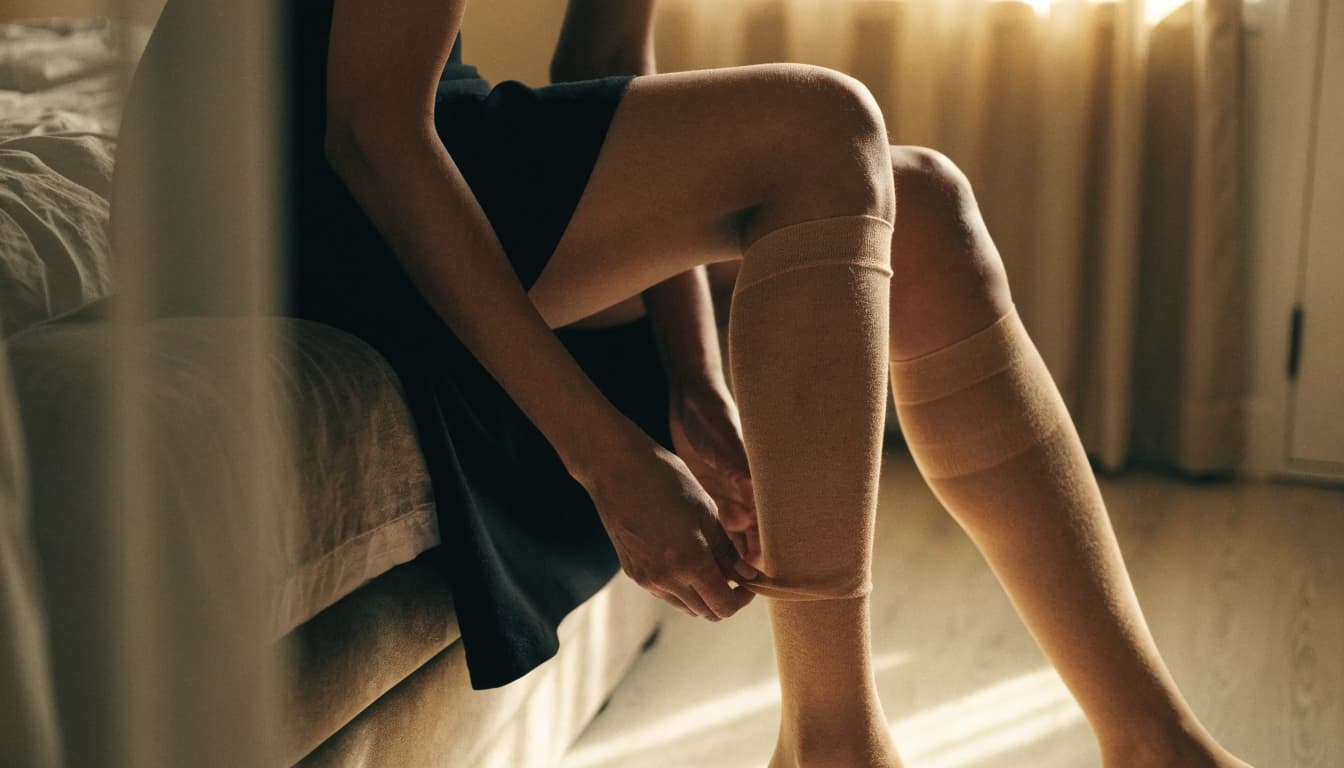
Pressure at the top band
A band that's stretched too tightly can press into the skin rather than resting comfortably against it. Twisting or folding the band can also concentrate pressure in a smaller area.
A faint impression without discomfort is different from a deep groove accompanied by pain or swelling. But, appearance alone can't tell you whether a mark is harmless. Pay attention to how your legs feel during wear and after the hosiery comes off.
You shouldn't have to tolerate pinching for the sake of keeping your knee highs up.
The whole stocking affects the fit
A tight band doesn't always mean the band is the only problem. If the leg feels stretched, the toes feel cramped, or the stocking doesn't reach comfortably, reconsider the overall fit.
Knee highs that are too small may feel tight at the top and still slide down. A pair that's too large may gather around the ankle or calf.
Plus, fabric that hasn't been distributed evenly can leave some areas tight and others loose. Smooth the stocking once, then notice whether the problem returns.
Choose Your Knee-High Size for Comfort
A familiar clothing size is a starting point, but it doesn't tell you everything about hosiery fit. Leg length, calf shape, and the construction of the particular style all affect comfort.
Use the chart for that exact pair
Our knee-high sizing guidance uses height and weight ranges, with Queen sizing available in selected styles. Choose using the chart attached to the pair you want, rather than carrying over a size from tights or pantyhose.
Use your current measurements, too. An old size can become a shopping habit long after your fit preferences have changed.
Our guide to comfortable knee highs under pants brings sizing, band comfort, and outfit layers together. It's especially useful when you're planning to wear your knee highs with boots.
Don't size down for extra hold
A smaller size can create more tension without giving you a better fit. Secure hosiery should stay comfortably placed without squeezing your calf.
If you're between options, consider where your current pair feels restricted. Tight toes, a difficult-to-position band, and fabric that feels stretched all deserve attention.
On the other hand, sizing up automatically can leave unwanted fabric around your ankles. Choose the range that suits your measurements, then judge the fit while sitting, standing, and walking. The smallest size isn't the goal.
Keep the Band Flat Below Your Knee
Band placement is a small detail with a noticeable effect on comfort. The top should sit below your knee, with the fabric smooth along your calf.
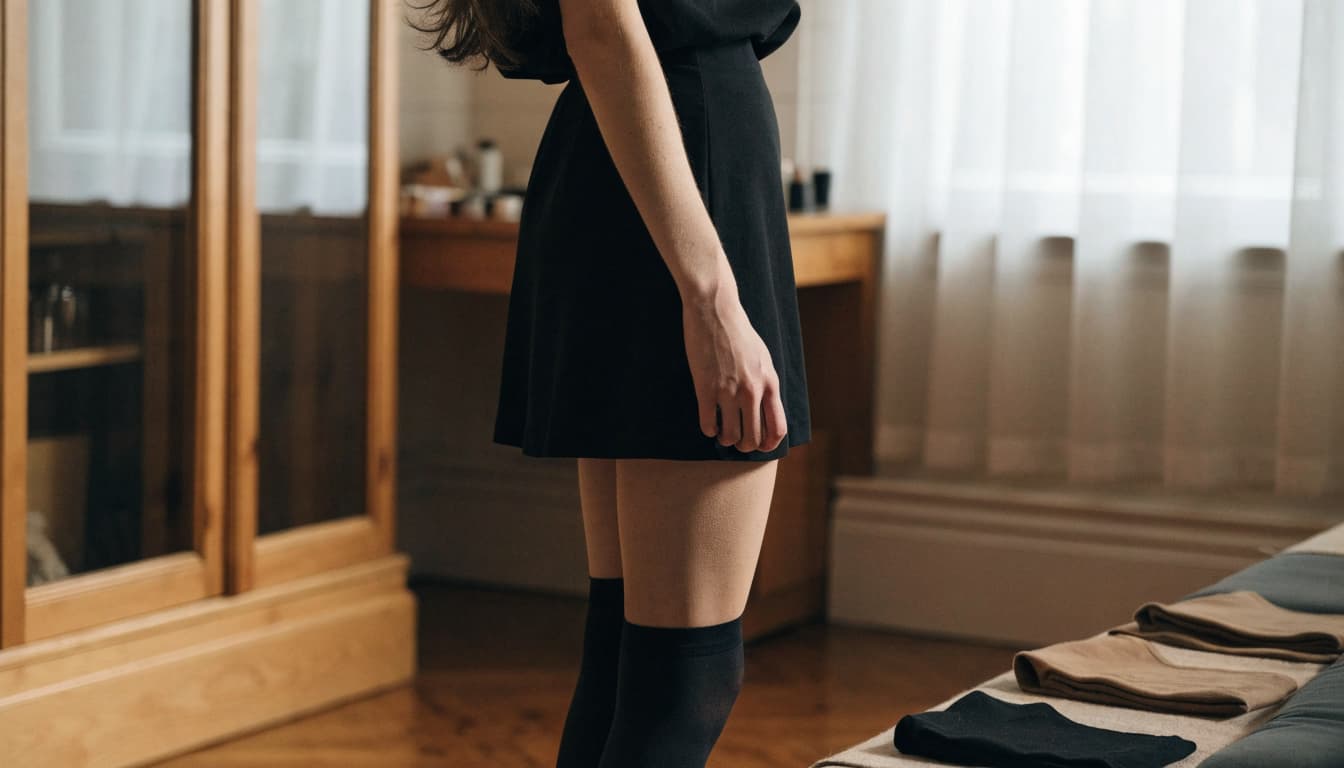
Avoid pulling the band into the bend
Pulling a knee high higher doesn't necessarily make it more secure. A band pushed into the crease behind your knee can feel uncomfortable when you sit or bend.
Ease the fabric evenly over your foot and calf before positioning the top. Leave the band below the bend rather than trying to make the stocking reach higher.
Then sit down. A pair that feels fine with straight legs may pinch once your knees are bent. That seated fit matters for a workday, dinner, or a long car ride.
Leave the band unfolded
Turning the top down may seem like an easy fix for excess length. But, folding puts layers of band material into the same narrow area.
A folded band can concentrate pressure even when the rest of the stocking feels roomy.
Keep the top untwisted and fully open. If the only comfortable placement requires repeated folding or rolling, another size or construction may suit your legs better.
Look Beyond Softness When Comparing Styles
A silky leg and a comfortable top band are separate parts of the shopping decision. Something can feel wonderfully smooth in your hand and still have the wrong proportions for your leg.
Consider construction as well as feel
Sheerness describes appearance, while band construction affects how the top sits. A sheer knee high isn't automatically gentler than an opaque style.
Stretch matters, too, but fiber content alone doesn't tell you how a finished pair will feel. The knit, length, and sizing all contribute.
A broader band may spread contact over more skin, but width alone doesn't promise comfort. Look at the whole fit rather than relying on a single feature. And, don't assume an extra-firm feeling means the pair is working better.
Choose details that suit your shoes
Our Queen All Day sheer knee highs, style 6451, offer a sheer look with a reinforced toe. They're one option to consider when you want that combination in Queen sizing.
The reinforced toe describes the foot construction, not how soft the top band will feel. Keep those decisions separate.
Tan sheers can blend with lighter trousers, while black hosiery pairs neatly with dark pants and boots. Once you've chosen the look, give the fit equal attention. A lovely shade can't make up for a band that pinches!
Put Knee Highs On Gently and Test the Outfit
Getting dressed gradually helps you distribute the fabric instead of asking the band to pull everything into place. Give yourself a moment before shoes and boots go on.
- Remove jewelry that could snag the fabric, and smooth rough nail edges.
- Gather one knee high toward the toe, then settle your foot into place.
- Ease the fabric over your ankle and calf in small sections, using the soft parts of your fingers.
- Smooth the leg with your palms, position the band flat, and repeat on the other side.
Next, try the complete outfit. Walk, sit, and bend your knees. Notice whether a boot shaft, trouser cuff, or another layer presses directly over the band.
Smooth the hosiery before adding boots so folds don't collect underneath. If the pair keeps slipping or digging after one gentle adjustment, repeated tugging won't create a better fit.
Between wears, store clean, dry hosiery loosely rather than knotting pairs together. Avoid pulling hard on the top when dressing or putting a pair away.
When Marks Need Medical Attention
Temporary pressure impressions can happen, but hosiery marks shouldn't become a reason to dismiss changes in your legs. Persistent swelling, pain, or skin changes need medical guidance, especially when they're new or worsening.
Remove the pair if it causes pain, numbness, tingling, or irritation. Don't keep wearing uncomfortable hosiery to see whether your legs will get used to it.
An itchy rash, broken skin, unusual warmth, or a change in skin color also deserves attention. A different band may help with fit, but it doesn't explain or treat those symptoms.
Seek prompt medical care for sudden swelling in one leg, particularly with pain, redness, or warmth. Chest pain or shortness of breath requires emergency help.
If you have a condition that affects circulation or sensation, ask your healthcare professional about appropriate hosiery. The same applies when compression has been prescribed. Choosing a softer everyday pair and choosing a medical garment are different decisions.
Frequently Asked Questions About Knee-High Marks
Does a mark mean my knee highs are too small?
Not necessarily. A temporary impression can result from contact pressure, while twisting, folding, and uneven fabric placement can affect how the band feels.
Look at the full fit. Cramped toes, a strained leg, and a pinching band are reasons to reconsider the size or style. A mark doesn't diagnose a circulation problem.
Will a larger size stop the marks?
A different size may help when the current pair is too tight, but it isn't a guaranteed solution. Extra fabric can wrinkle or slide if the larger pair doesn't suit your proportions.
Start with the product's size range. Then assess whether the stocking sits smoothly and comfortably, without pulling it higher or folding the top to make it work.
Are support knee highs the same as medical compression stockings?
Not necessarily. We offer support hosiery, including styles with graduated compression through the legs. Our knee-high and support hosiery FAQs describe the available categories.
A tight top band alone doesn't tell you that a garment provides graduated compression. If you need compression for a medical condition, your healthcare professional should guide the garment and compression level.
A Softer Fit Starts With the Whole Pair
Comfortable knee-high hosiery should sit smoothly, with enough room through the foot and calf and a flat band below your knee. Choose the right size range, put the pair on gently, and test it while moving.
A temporary impression can come from pressure, but pain or persistent swelling shouldn't be ignored. Your hosiery should feel comfortable enough to let you enjoy the outfit and the plans ahead.


