


A pair of hosiery can make your outfit look polished, soft, bold, or a little too covered up. That tiny number on the package is often the reason! Hosiery denier tells you a lot about how the fabric will look and feel before you ever put it on.
Once you know what to look for, shopping gets much easier. You can choose a barely-there nude for a daytime dress, smooth black tights for work, or fuller coverage when the weather turns chilly.
Let's make sense of the number, then put it to work in your closet.
How Hosiery Denier Changes Coverage
Denier is a measurement of yarn weight. More exactly, it measures how many grams 9,000 meters of yarn weigh. That sounds a little technical, but the shopping takeaway is simple: a lower denier usually looks lighter and sheerer, while a higher denier usually looks denser and more covered.
A 10 denier style can give the legs a nearly bare look. A 30 denier pair usually has more visible color and a smoother finish. Move up to 40, 60, or 70 denier, and you will generally see fuller coverage.
The number is a helpful clue, not the whole story
Hosiery denier doesn't tell you everything. Fiber type, knit construction, color, and the way hosiery stretches on your legs all affect the final look.
Black hosiery naturally appears more opaque than a nude pair with the same denier. A microfiber tight can also feel softer and look more substantial than a traditional sheer at a similar number. So, use denier as your starting point, then think about color, outfit, and the finish you want.
A quick guide to common denier ranges
Here is the easy version when you are getting dressed in a hurry:
| Denier range | Usual look | Outfit ideas |
|---|---|---|
| 5 to 15 | Very sheer, barely-there | Weddings, warm days, polished bare-leg effect |
| 15 to 30 | Sheer with light coverage | Work dresses, skirts, dressy daytime outfits |
| 30 to 50 | Medium coverage | Cooler days, tailored outfits, everyday tights |
| 60 and up | Fuller, more opaque coverage | Winter dresses, boots, sweaters, bold black looks |
The ranges can overlap a bit, but the pattern holds. Higher numbers bring more visual weight to an outfit.
Sheerness, Opacity, and Compression Are Different Things
These terms often get tossed together, but they describe different parts of the hosiery experience. And, mixing them up can lead to a pair that looks right but doesn't feel right.
Sheerness and opacity describe what you see
Sheerness is how much skin shows through the fabric. A sheer pantyhose gives your legs a smooth, finished look while keeping your natural skin tone visible.
Opacity is how much the fabric blocks your skin from view. Opaque tights create a more solid, uniform line, especially in black, navy, or other dark shades.
A 40 denier tight may look lightly opaque in one color and more covered in another. That is why it helps to picture the hosiery with the rest of your outfit, not only on its own.
Compression and control are about feel and fit
Compression is not the same as denier. It describes graduated support through the leg, while denier describes the yarn weight. You can have a lighter-looking sheer with support, or a fuller-coverage style without it.
For example, Berkshire's 30 denier sheer support hosiery combines a sheer leg with light graduated compression. It is a wonderful option when you want a polished finish but prefer a little more support during a long day.
Control tops are another separate feature. They smooth and shape the waist and panty area. They don't automatically make the leg more opaque, but they can make a fitted dress or pencil skirt feel more comfortable.
A higher denier can add coverage, but it doesn't automatically mean more compression or a firmer control top.
Match Denier to the Clothes You Are Wearing
Think of hosiery like the background color in a room. It may not be the first thing people notice, but it changes how everything else comes together.
For a floaty dress, light skirt, or delicate blouse, a sheer denier keeps the outfit feeling airy. For a structured blazer, knit dress, or substantial skirt, medium and opaque hosiery adds balance. A heavier tight with a summer-weight dress can feel a little off, while a very sheer pair may disappear under a winter outfit.
Everyday outfits need easy, flexible coverage
For errands, casual lunches, and regular office days, 30 to 40 denier is often the sweet spot. It gives you more coverage than a traditional ultra sheer without looking heavy.
Berkshire's Easy On 40 denier microfiber tights are made for that sort of day. The cooling control top, knit-in ventilation, and easy stretch give you practical comfort, while the 40 denier leg has the coverage that works with skirts, shirt dresses, and ankle boots.
Evening dressing can go sheer or bold
A sleek black dress with sheer black hosiery feels refined and dressy. Add pointed-toe pumps, a small clutch, and simple jewelry, and the look stays light.
Want more contrast? Opaque black tights with a shorter black dress or a jewel-toned mini create a confident, fashion-forward line. Keep the shoes simple, especially if your skirt already has texture, shine, lace, or a bold print. Let one piece do the talking!
Choosing Tan Hosiery Without Looking Overdone
Tan hosiery should make your legs look like your legs on a particularly good day. The goal isn't to add obvious color. It is to create an even, polished finish that works with your skin tone and outfit.
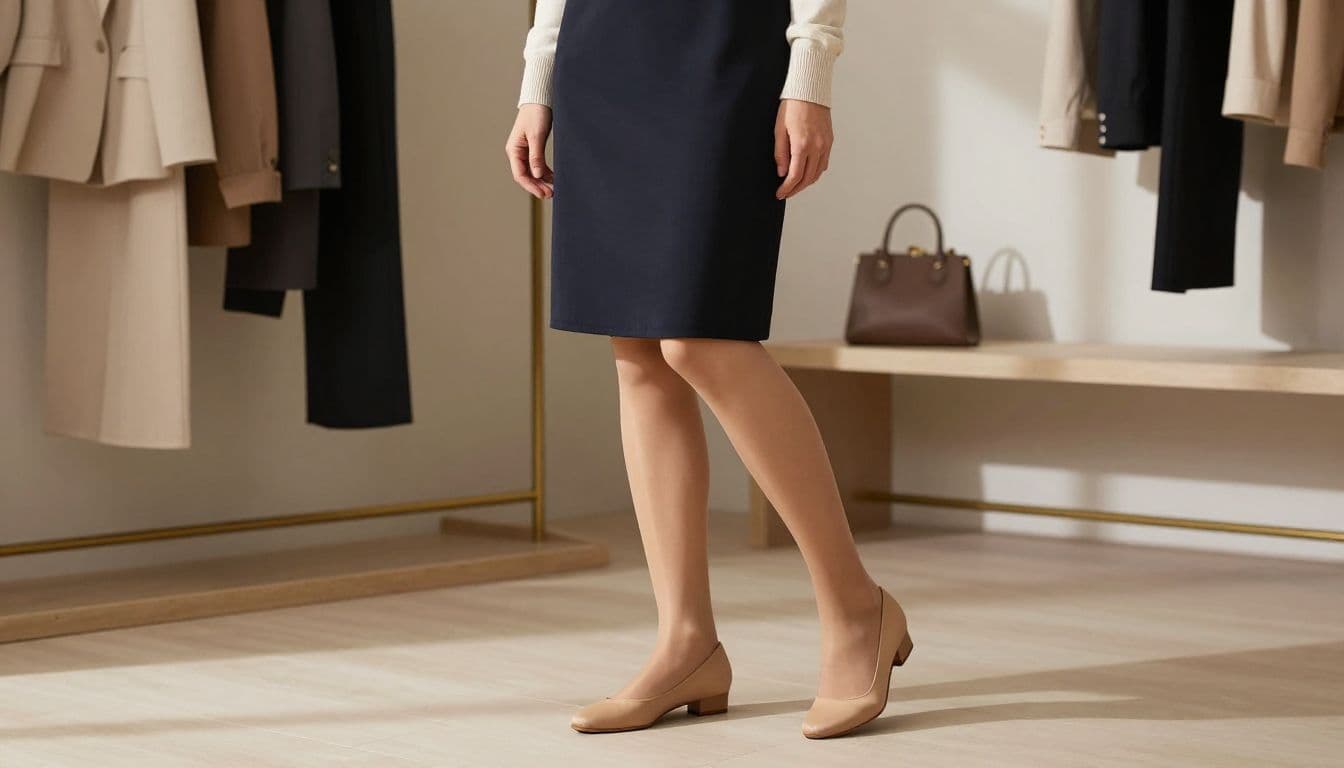
Start with a light, natural-looking denier
A sheer nude style is lovely with a navy shift dress, beige pumps, a floral midi, or a special-occasion outfit. Light coverage lets your skin show through and keeps the finish soft.
If you want more smoothing, move toward 20 or 30 denier. You will still get a natural look, but the color and coverage become more noticeable. This can be especially nice if you prefer a little extra confidence with a knee-length dress or skirt.
Consider your undertone and your shoes
A tan shade that is too warm, cool, dark, or pale can stand out against your skin. Try to choose a shade that blends with the tone of your legs rather than matching your foundation or the color of your shoes.
Nude pumps and tan hosiery can create a long, unbroken leg line. Black shoes with tan pantyhose can work too, especially with a black hemline or a darker outfit. But, when the dress is light and the shoe is black, a sheer black pair often makes the outfit feel more intentional.
For cooler days, fuller nude coverage can still look graceful under a camel skirt, a soft gray dress, or a cream sweater dress. It is all about keeping the shade believable.
Black Hosiery Gives an Outfit Its Shape
Black hosiery is a closet favorite because it adds definition right away. It can ground a printed dress, make a short skirt feel more wearable, or pull a black shoe into the rest of your look.
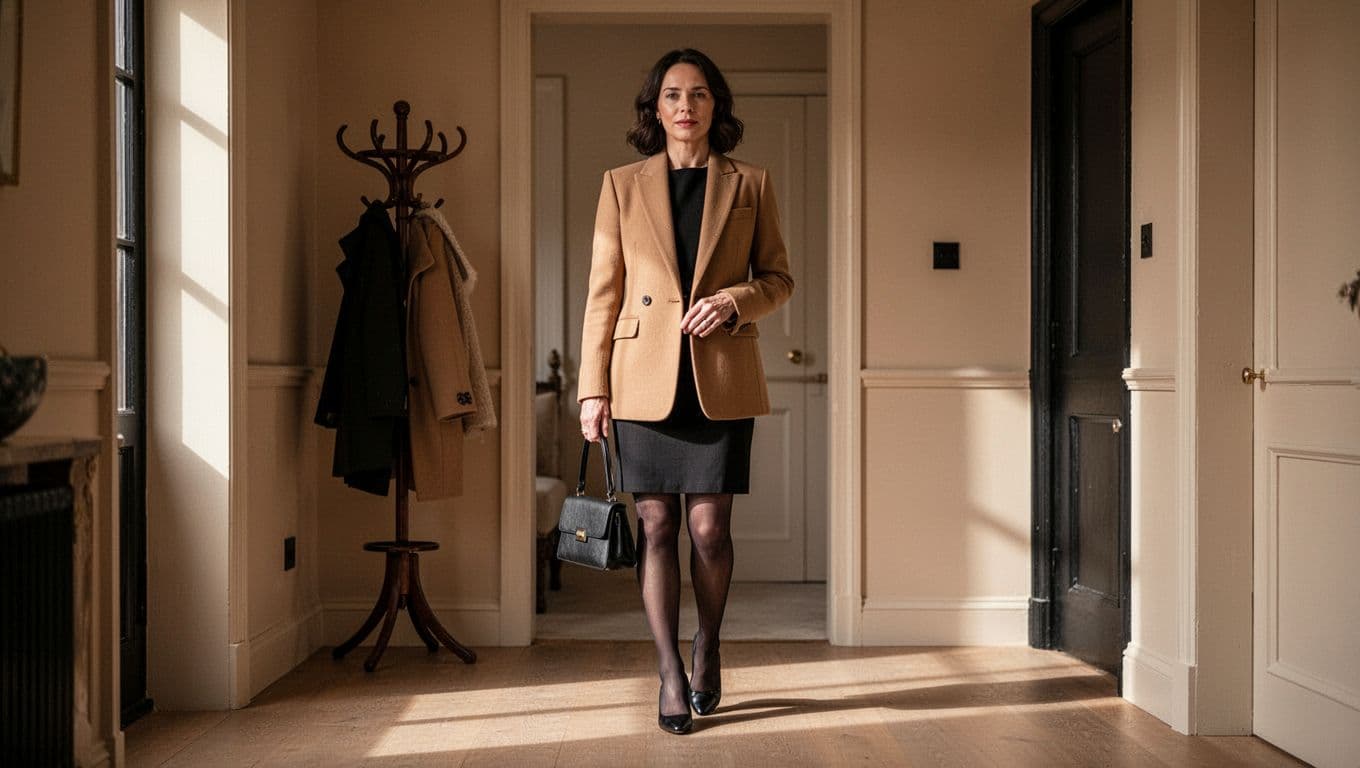
Keep it sheer when the outfit is light
Sheer black pantyhose look beautiful with cocktail dresses, satin skirts, dresses with a defined waist, and closed-toe heels. They add polish without giving your legs a fully solid look.
This is also a good choice for warmer evenings, early fall, and formal events. A sheer black leg has a little mystery to it, but it doesn't make the outfit feel wintery.
Choose opaque black for colder days and stronger contrast
Opaque tights are cozy, stylish, and wonderfully practical. Pair them with ankle boots, loafers, knee-high boots, sweater dresses, plaid skirts, or a black mini and oversized blazer.
Berkshire's Luxe Opaque Control Top Tights have a 40 denier leg and a control top that smoothes and shapes the waist. They are an ideal choice when you want coverage that still looks sleek under a closer-fitting dress.
A 70 denier pair brings even more presence. Berkshire's full support compression pantyhose combine 70 denier coverage, a control top, reinforced toe, and graduated compression. They are a smart choice for a long workday with boots, a tailored skirt, or a colder commute.
Get the Right Fit Before You Judge the Denier
Even beautiful hosiery won't look its best in the wrong size. When a pair is too small, the yarn stretches too far and can look sheerer than intended. It may also feel tight at the waistband or pull uncomfortably at the toes.
When a pair is too large, you may end up with extra fabric at the ankle or behind the knee. That can make the outfit look less smooth, no matter what denier you chose.
Let the size chart do the hard work
Use your height and weight together when selecting a size. Don't size down because you want a more sculpted look. The correct size gives the fabric room to sit smoothly, and it lets the hosiery deliver the coverage it was designed to give.
Put pantyhose or tights on a little at a time, working from the toes upward. Avoid pulling from the waistband alone. And, keep nails and rings away from the fabric when possible. Tiny snags have a way of appearing five minutes before you need to leave!
For care, follow the directions on the package. Berkshire recommends hand washing the Luxe Opaque Control Top Tight separately in warm water, skipping bleach, and drip drying.
Make Denier Part of Your Outfit Plan
The right hosiery denier isn't about following a strict rule. It is about choosing the amount of coverage that makes your outfit feel balanced, comfortable, and like you.
Keep a sheer tan pair for polished bare-leg days, a versatile medium-denier option for work, and opaque black tights for cooler weather. With those choices in your drawer, getting dressed feels much less complicated.
The number matters, but the confidence you feel in the finished outfit matters more.


