


A beautiful pair of hosiery can transform an outfit, but one rough wash can undo all of that work. If you've ever pulled on tights and discovered a snag, stretched waistband, or faded color, you know how frustrating it feels.
These hosiery care tips will help you protect the fit, softness, elasticity, and polished appearance of your favorite Berkshire styles. A few extra minutes at the sink, plus smarter drying and storage, can make your hosiery last much longer. Start with the care label, then build a gentle routine around it.
Hosiery Care Tips for Washing Without Damage
Care starts before the water touches the fabric. Hosiery is lighter and more delicate than most clothing, so it shouldn't be tossed into a full laundry load with denim, towels, zippers, or rough fabrics.
Read the care label before washing
Care instructions can vary by denier, fiber blend, lining, and finish. Ultra-sheer pantyhose need especially gentle handling, while thicker tights may take a little longer to dry.
Berkshire's care directions commonly recommend hand washing hosiery separately in warm water, avoiding bleach, and drip drying. For example, the Berkshire Easy On Shine On tights and the 70 denier Berkshire Cozy Hose tights both include these instructions.
Warm water should feel comfortable to your hand, not hot. Heat can affect stretch fibers and may cause colors to fade faster. When in doubt, choose cooler water and follow the product label.
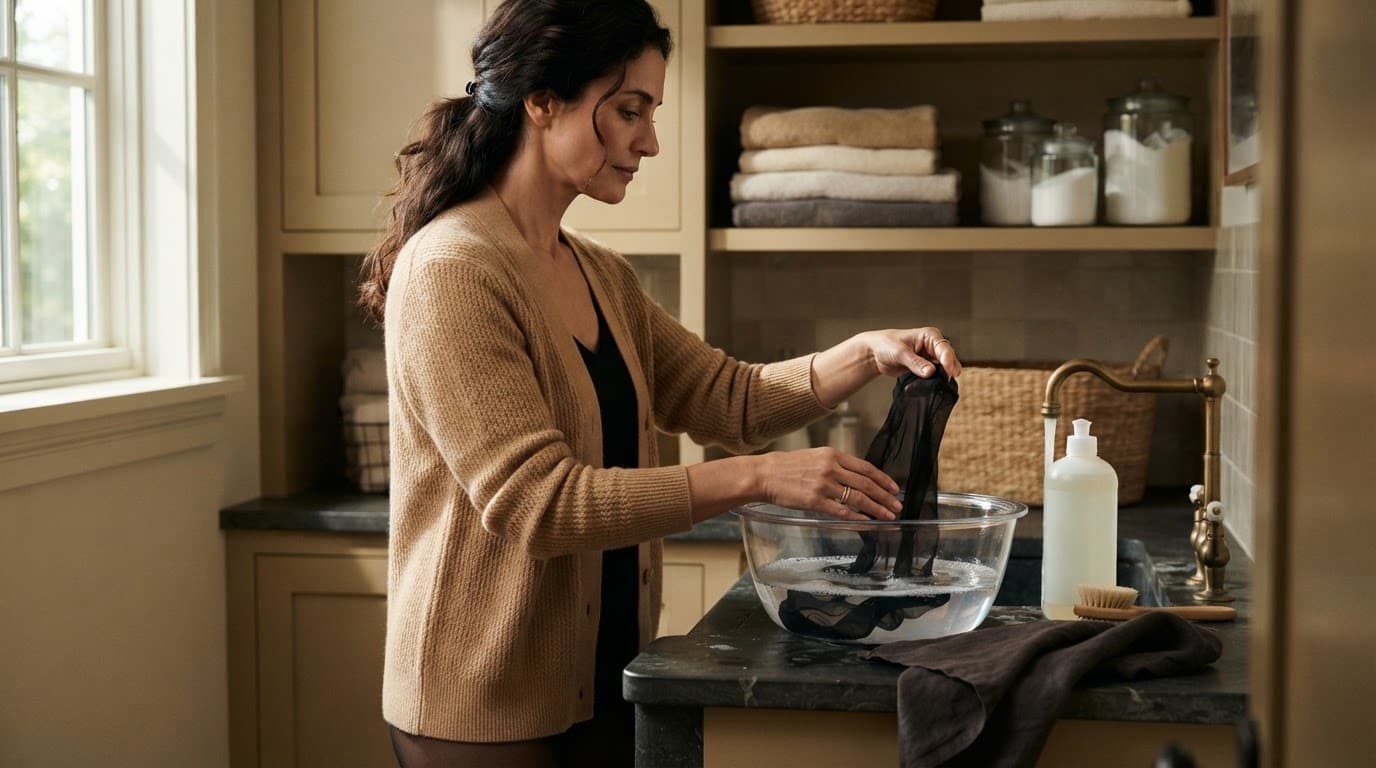
Use a gentle hand-washing routine
Hand washing gives you the most control. It also keeps hosiery away from the friction and twisting that can happen inside a washing machine.
- Fill a clean basin with lukewarm water and add a small amount of mild detergent.
- Place the hosiery in the water and let it soak for a few minutes.
- Gently move the fabric through the water, paying attention to the waistband, soles, and toe area.
- Rinse with clean water until the detergent is gone.
- Press out excess water without twisting, wringing, or pulling the legs.
Don't scrub a stain aggressively. Instead, add a little mild detergent to the area and massage it gently with your fingertips. Bleach is a no, even for white or pale hosiery, because it can weaken fibers and change the color.
If you must use a washing machine, place the hosiery in a protective mesh laundry bag and select the gentlest cycle with cool or lukewarm water. Hand washing is still the better choice for sheer, embellished, lace-top, or especially delicate styles.
How to Dry Hosiery Without Stretching It
Drying can be just as hard on hosiery as washing. A hot dryer may feel convenient, but heat and tumbling can damage elasticity, create uneven stretching, and shorten the life of the garment.
Press out water instead of wringing
After rinsing, lay the hosiery on a clean towel. Roll the towel loosely with the hosiery inside, then press gently to absorb moisture.
This method removes water without putting stress on the waistband, seams, toes, or heels. Never twist the legs together. Even thick tights can stretch out of shape when wet, and sheer styles are even more vulnerable.
Let air do the work
Drip drying is a dependable choice for most Berkshire hosiery. Hang the piece over a drying rack or lay it flat on a clean, dry towel. If you use a rack, avoid hanging hosiery by one small section of the waistband, which can create a stretched spot.
Keep the garment away from radiators, heated vents, fireplaces, and hair dryers. Direct sunlight can also fade tan and black tones over time. A shaded, well-ventilated area is ideal.
Make sure hosiery is completely dry before putting it away. Storing damp fabric can create a musty smell and may affect the freshness of nearby garments. Thicker fleece-lined or plush-lined tights need extra drying time because their heavier fabric holds more moisture.
How to Prevent Snags Before They Start
Many hosiery snags happen before you leave the house. A rough fingernail, a ring, a zipper, or a sharp edge inside a shoe can catch delicate fibers in seconds.
Prepare your hands and clothing
Before putting on hosiery, remove rings, bracelets, and watches. Check your fingernails and smooth any hangnails. If your hands are dry, apply hand lotion first, but give it time to absorb fully before touching the fabric.
Look over your clothing, too. Zippers, hook-and-eye closures, sequins, and rough seams can catch against hosiery while you're dressing or moving throughout the day. Put on tights before a skirt or dress with a difficult closure, so you aren't reaching through the finished outfit and pulling at the legs.
Shoes deserve a quick inspection. Feel inside each shoe for a rough spot, loose thread, or sharp edge around the toe. A tiny problem inside a pump or boot can cause repeated damage in the same place.
Pull hosiery up in stages
Don't pull hosiery from the waistband all the way down to your ankles. That puts unnecessary tension on the legs and can make the fabric stretch unevenly.
Instead, gather one leg gently in your hands. Guide your toes into the foot, then ease the heel into place. Smooth the hosiery up over your calf before moving toward your knee and thigh. Repeat on the other leg, then adjust the waistband once both legs are in place.
Use the palms and soft parts of your hands rather than your fingertips. Take your time around reinforced toes, lace panels, backseams, and decorative details.
A snag that appears while dressing is often caused by pulling too far in one motion, not by the hosiery being too small.
If the waistband feels difficult to position, check the size before forcing it. Proper sizing makes hosiery easier to put on and helps prevent overstretching.
Hosiery Care Tips for Keeping Pairs Organized
Good storage protects hosiery between wears. A crowded drawer can create snags, stretch the waistband, and make tan shades look muddled together.

Fold hosiery loosely, don't knot it
Once hosiery is dry, lay it flat and bring the legs together. Fold the pair in half or roll it loosely from the toes upward. Avoid tight balls, knots, or sharp folds, especially with sheer styles.
Keep each pair together without stuffing one leg inside the other. That habit can pull on the fabric and make it harder to find small snags before the next wear.
Separate black, tan, nude, and fashion colors when possible. Keeping shades organized makes it easier to choose the right match for your outfit and prevents you from repeatedly handling every pair in the drawer.
Choose a cool, dry drawer
A clean dresser drawer is usually better than a bathroom shelf or a plastic storage bin. Bathrooms can be humid, while airtight containers may trap moisture if the hosiery isn't completely dry.
Drawer dividers or soft fabric compartments help keep hosiery from rubbing against zippers, metal fasteners, and rough accessories. If you store hosiery in a closet, use a breathable fabric pouch rather than a tightly packed plastic bag.
Keep tights and pantyhose away from shoes, jewelry, hair accessories, and anything with a sharp edge. Store stockings with the lace top lying flat, without folding or crushing the delicate upper band.
For travel, place each pair in a separate soft pouch or mesh bag. It takes up little room and prevents a zipper or cosmetic compact from creating an unwanted souvenir.
Adjust Care for Different Hosiery Styles
Your favorite ultra-sheer pantyhose and your thick winter tights don't need identical handling. The fabric weight changes, but the basic rules stay the same: gentle washing, no harsh heat, and careful storage.
Sheer, control-top, and support hosiery
Ultra-sheer styles should be washed after each wear, especially if they've been worn in warm weather. Oils, lotion, and perspiration can build up in the waistband and foot area, so a short hand wash helps keep the fabric fresh.
Control tops and support styles contain more stretch through the panty or leg. Don't pull hard on one section when dressing, and don't hang wet hosiery by the waistband. Lay it flat or support it across a drying rack.
Berkshire's light support maternity pantyhose include a lace tummy panel and reinforced toe. Styles with a lace panel, control area, or reinforced construction should be handled gently around those seams.
Fleece-lined, thermal, and specialty styles
Thick tights hold more water, so allow extra time for air drying. Turn plush-lined tights gently as needed during drying, but don't pull sharply at the lining or seams.
Berkshire's thermal plush-lined tights are 200 denier and lined from the waist to the toes. Their heavier construction makes a dryer especially tempting, but drip drying is the safer routine.
Shimmers, fishnets, backseams, lace tops, and thigh highs also benefit from separate hand washing. Keep decorative details away from rough towels and store them flat when possible. These hosiery care tips are simple, but they protect the details that make a special pair worth wearing.
Final Thoughts
Hosiery lasts longer when you treat it like a delicate part of your wardrobe, not like an ordinary laundry item. Wash it gently, press out water instead of wringing, air dry it away from heat, and store each pair where it won't rub against sharp objects.
The right size and careful handling work together. When your hosiery keeps its shape, color, and smooth fit, getting dressed feels easier, and every outfit looks more polished. That small amount of care can keep your favorite Berkshire styles ready for workdays, celebrations, and everything in between.


